Dataset & benchmark · driver motion · arXiv 2026
DriveMotionA Large-Scale Multi-Source Benchmark for Driver Motion Sequence Modeling and Forecasting
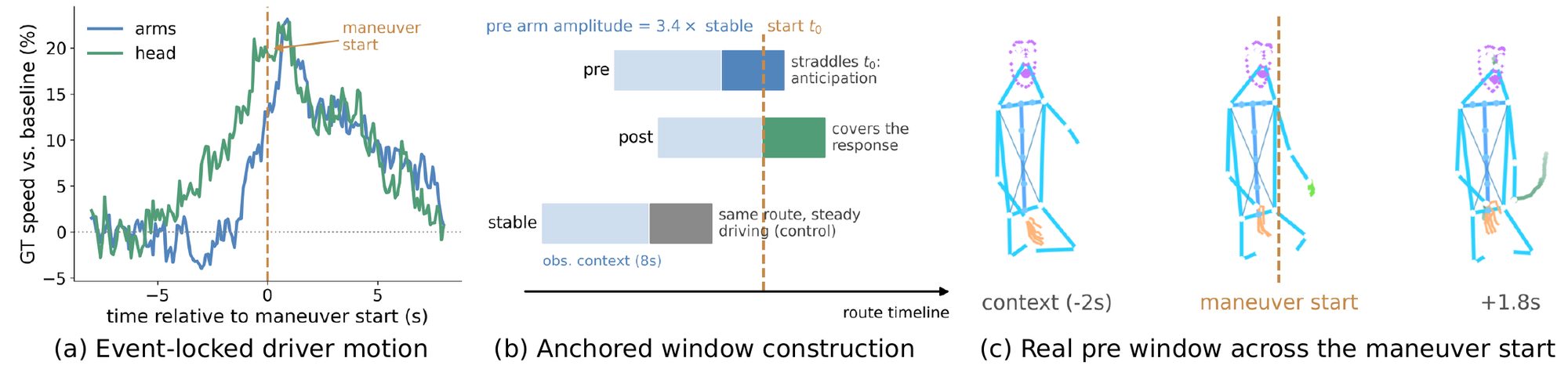
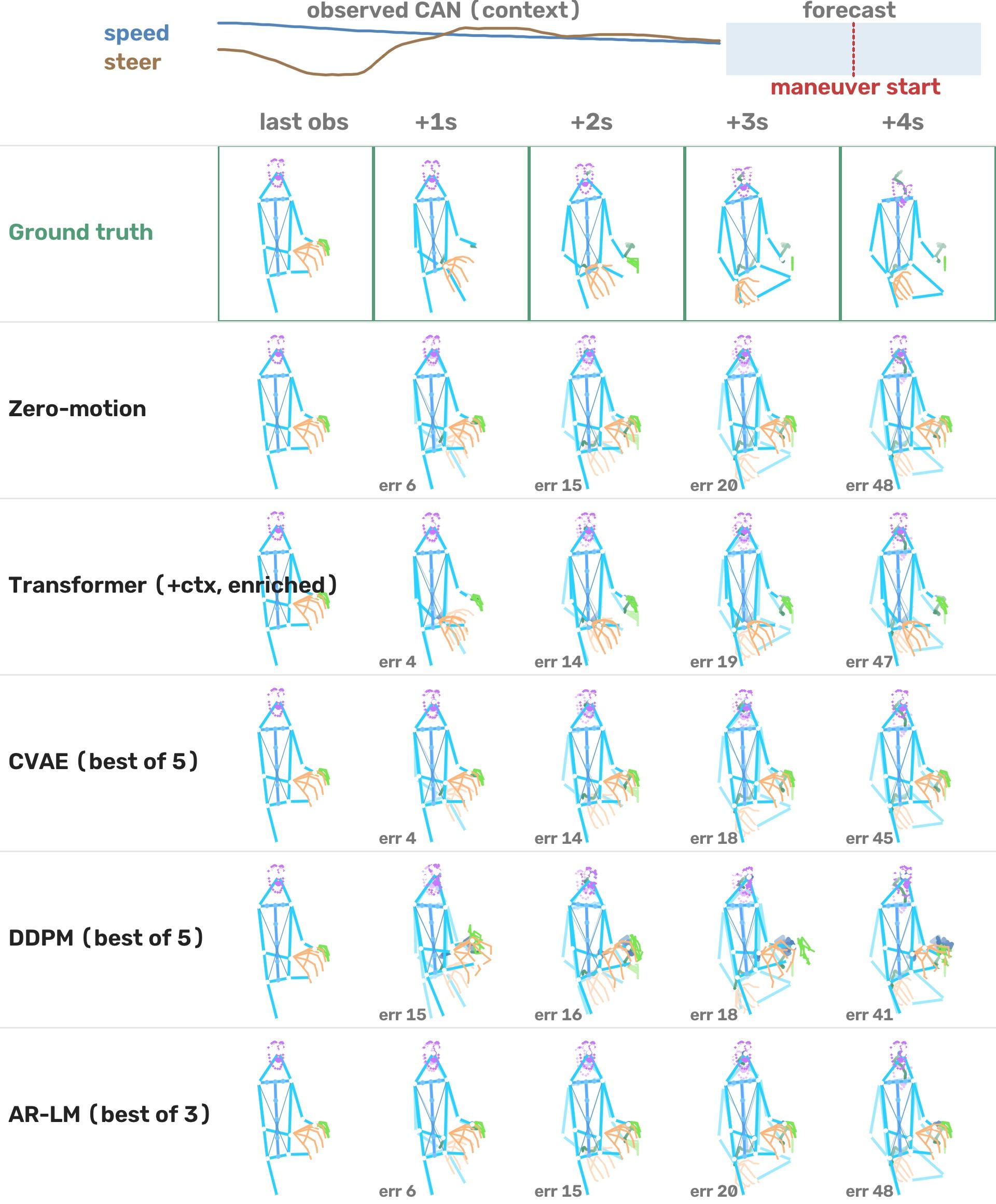
A multi-source, skeleton-only benchmark that forecasts the driver's whole body — 133 keypoints at 10 Hz — seconds ahead, anchored on real manoeuvres rather than on moments when nothing happens.
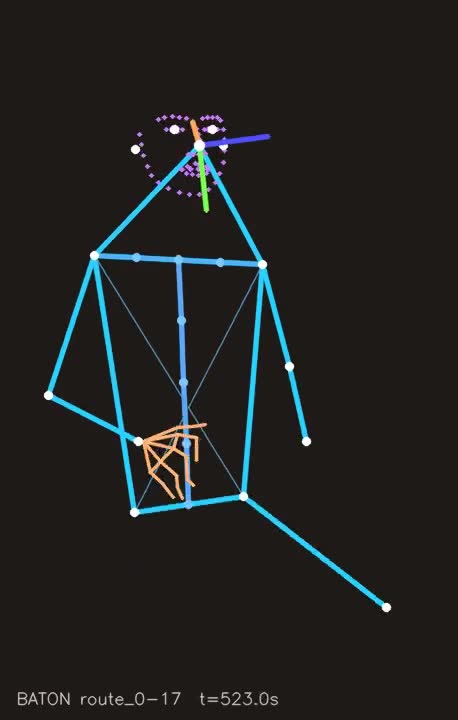
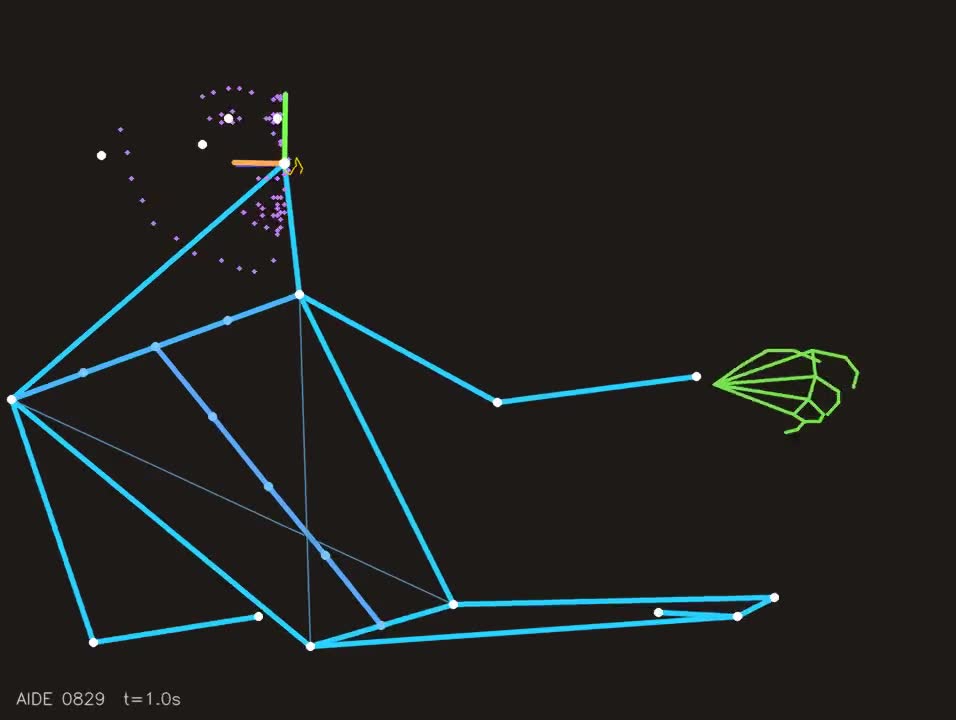
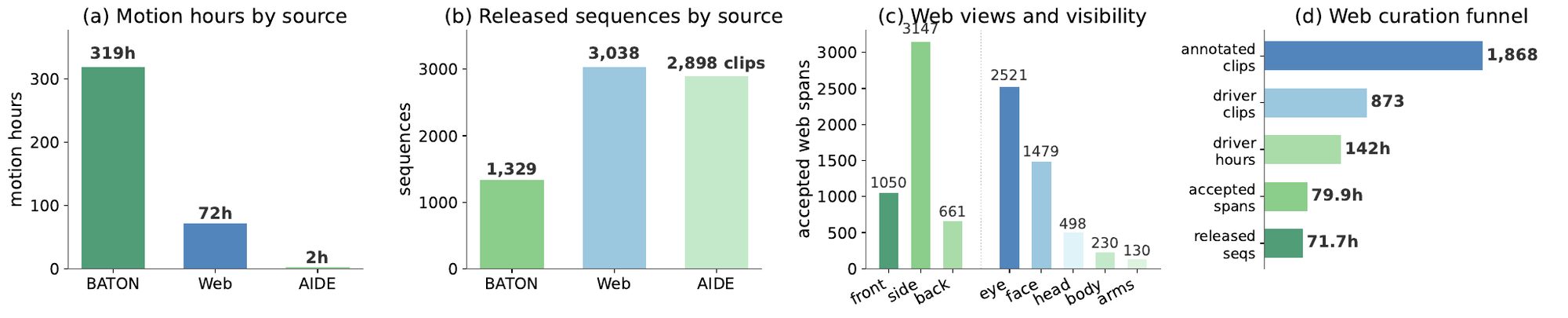
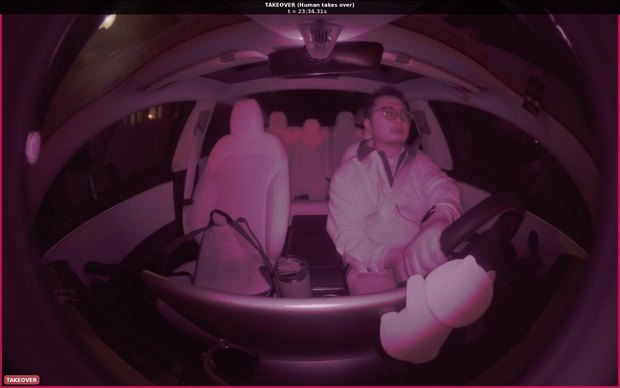
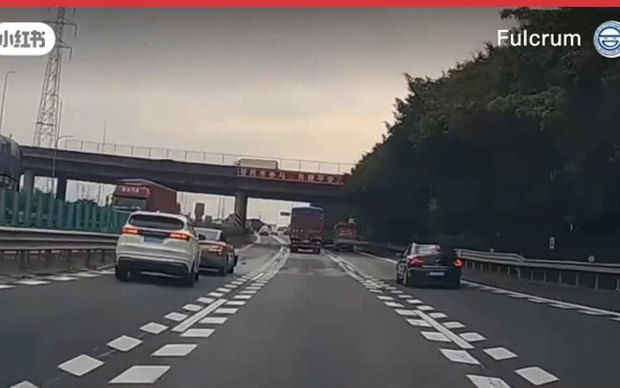
Three sources through one extraction trunk: a continuous fleet (time-aligned CAN, device head pose), a curated web corpus (front / side / back views, five visibility levels) and the AIDE clips (behaviour and emotion labels). Every sequence is released as a privacy-reduced skeleton video plus a standardized keypoint tensor — the behaviour is kept, the appearance is not.
arXiv 2609.08117 · 2026400 h · 9,010 sequences · 360 drivers (release)CC BY 4.0 · skeleton-derived
Yuhang Wang1·Chuheng Wei2·Jingxin Yang3·Xishun Liao4·Hao Zhou1
1University of South Florida · MOTIF-Lab 2Purdue University 3Stanford University 4University of Central Florida